
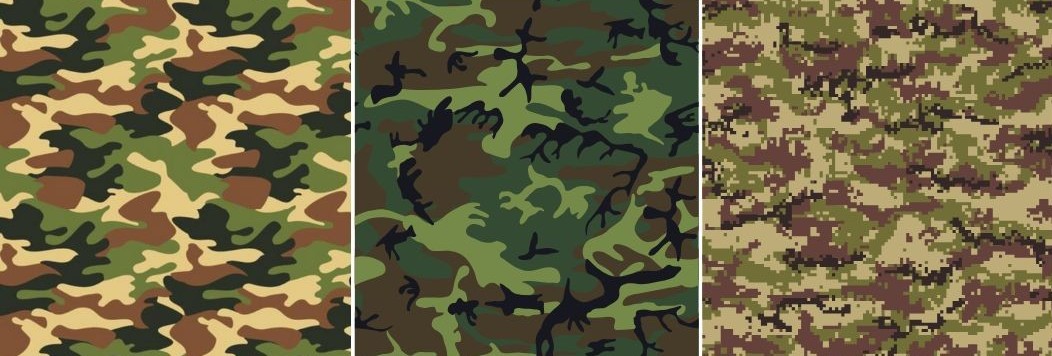
Across deserts, jungles, and other conflict terrains, militaries around the globe have developed a remarkable range of camouflage patterns tailored to their specific environments and missions. However, beyond combat, camouflage has found its way into civilian use; hunters stalking game, airsoft enthusiasts in mock battles, hikers seeking low‑profile gear, and even fashion brands such as Tommy Hilfiger adopting camo’s aesthetics for everyday apparel.
From classic woodland designs to specialised concealment for urban warfare, we’ll explore the types of camouflage that showcase the art and science of blending into the landscape, featuring examples from the UK, U.S., Canada, and beyond!
17 Types of Military Camouflage Patterns
Here are 17 of the most notable military camouflage patterns and designs:
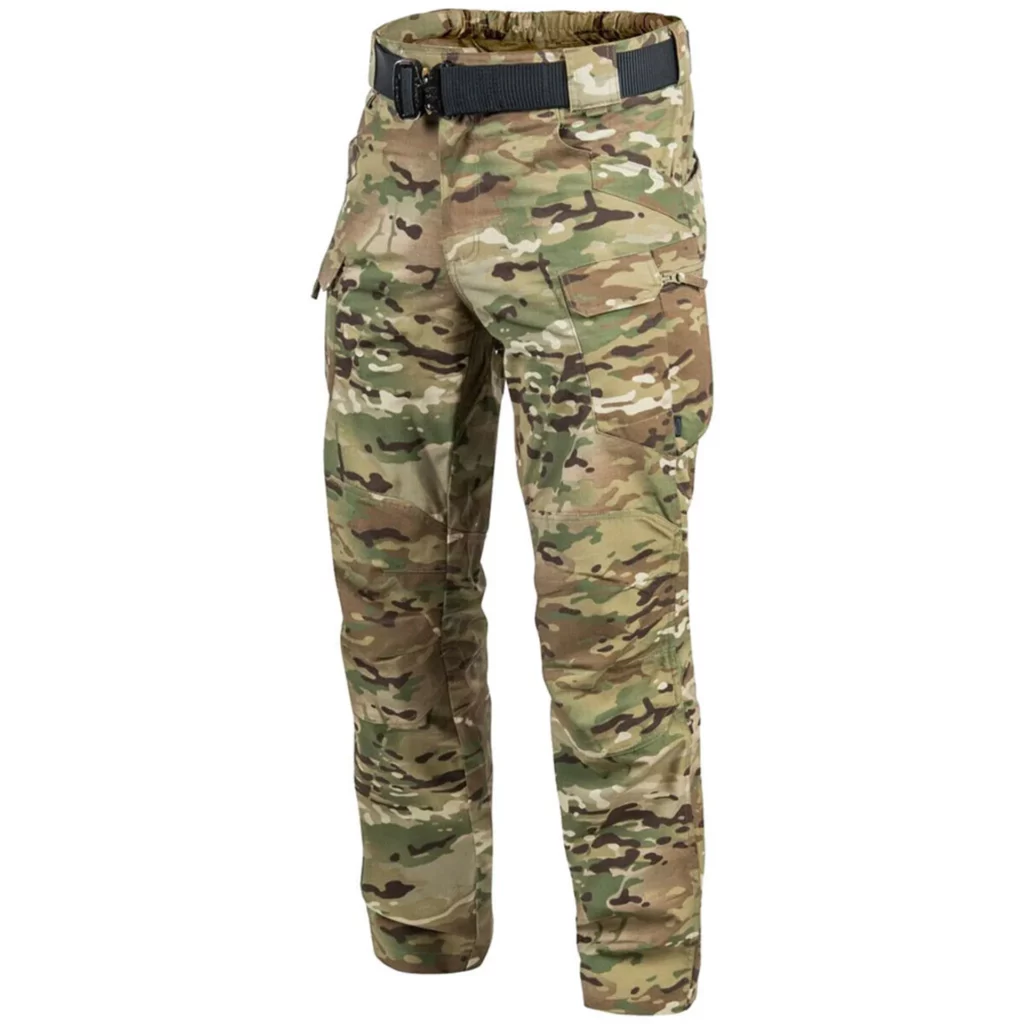
MultiCam
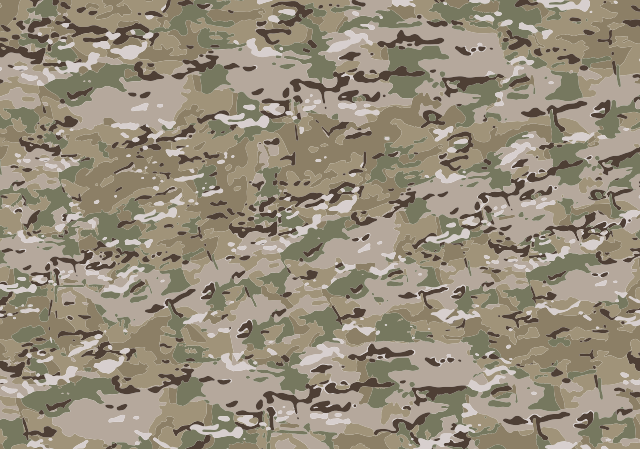
Developed by U.S. company Crye Precision and adopted by NATO forces in 2002, MultiCam uses a blend of greens, browns, and beiges in a gradient pattern. It’s designed to work across a wide range of environments – from barren deserts to dense woodlands – reducing the need for multiple uniforms. MultiCam is, as of 2025, still the main camouflage used by the U.S. military.
Disruptive Pattern Material (DPM)
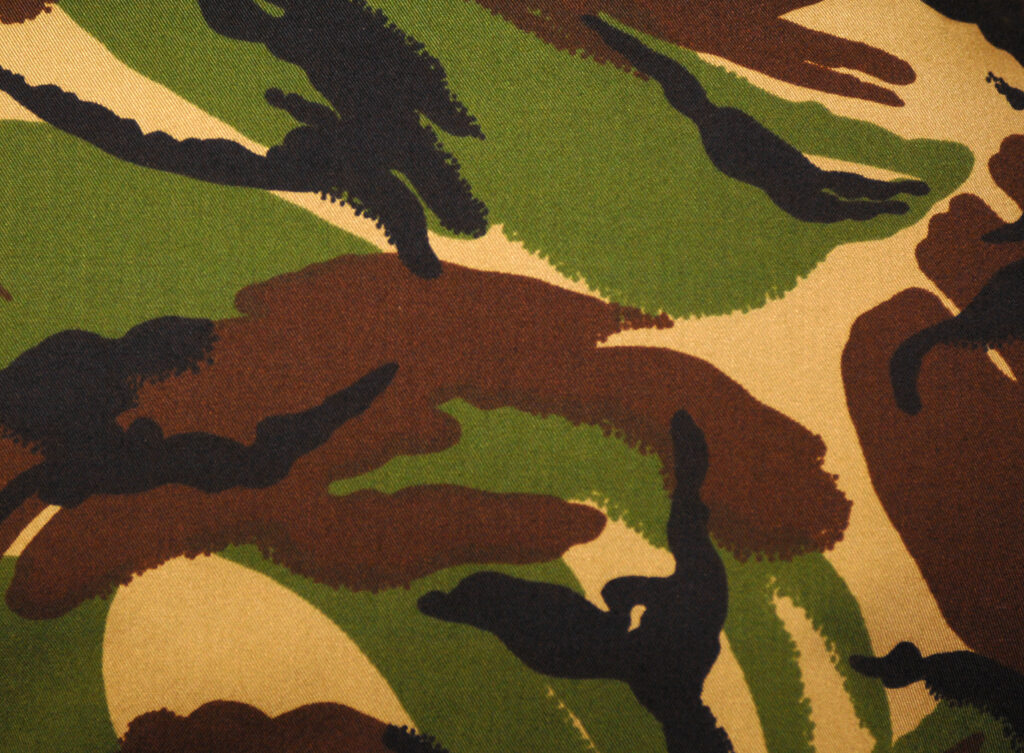
First fielded by the British Army in the late 1960s (although predominantly in the 1970s), DPM features undulating brown, black, and green shapes on a khaki background. Its high-contrast shapes effectively disrupt outlines in many different terrains, particularly woodlands. The DPM pattern was used throughout several conflicts over the past 50 years, including the Falklands War and the Gulf War.
Multi‑Terrain Pattern (MTP)
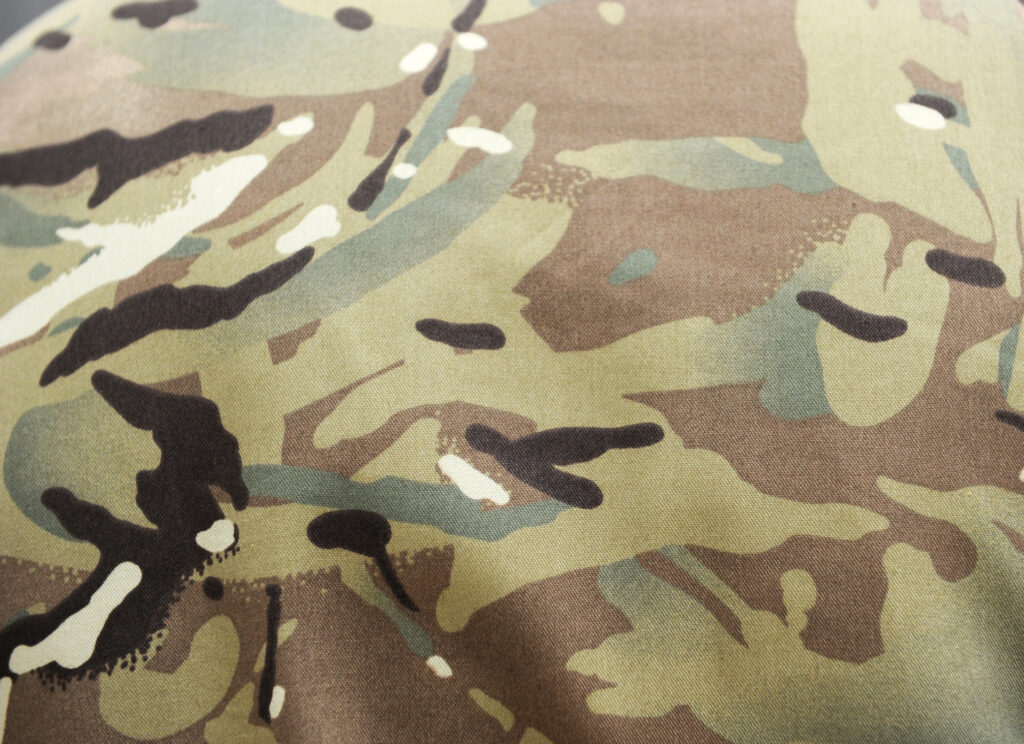
The British successor to DPM, MTP combines MultiCam’s blended colours with DPM’s disruptive shapes. Introduced in the 2000s, this design offers improved concealment across a variety of landscapes, from desert to urban, under a single uniform. MTP was first used in combat during the war in Afghanistan, initially issued to personnel deployed on Operation Herrick.
U.S. Woodland
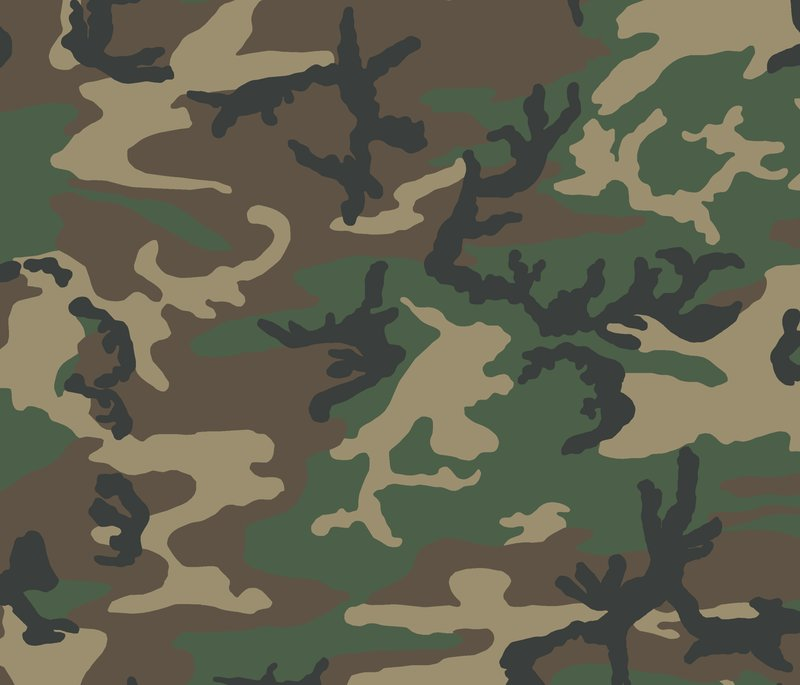
Introduced in 1981, this four‑colour pattern (green, brown, black, and khaki) became the U.S. military’s standard issue until 2006, and is still used in around ¼ of all militaries worldwide. Familiar around the globe through army surplus and pop culture, the U.S. Woodland’s large, irregular shapes break up a soldier’s outline in temperate forests.
ERDL (Engineer Research and Development Laboratory)
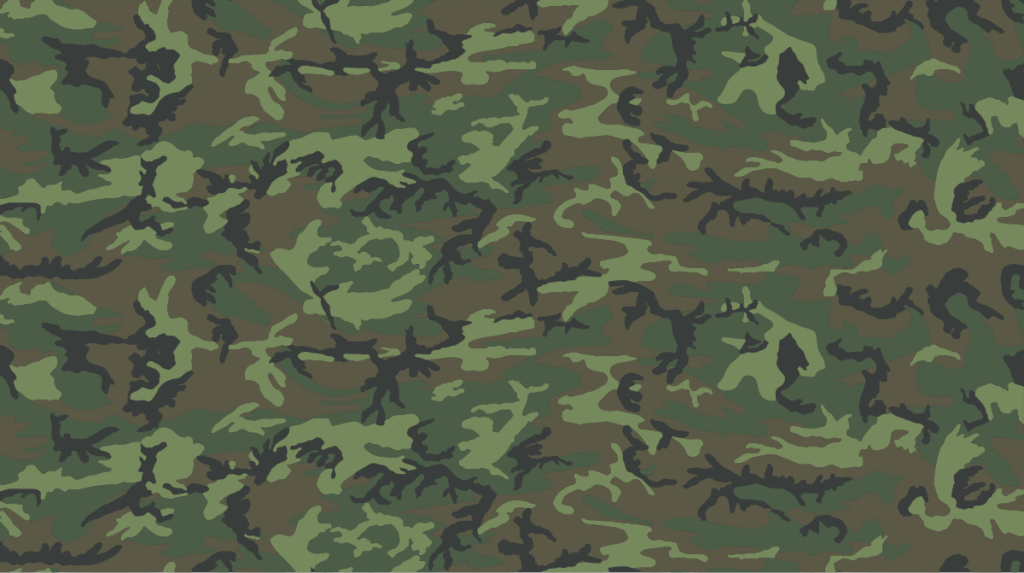
Developed by the U.S. in 1948, ERDL’s small, tight leaf‑like shapes in different greens and browns were initially used for jungle warfare in Vietnam. Its finer patterning provides better concealment at close range in dense foliage, mimicking twigs and branches. The U.S. Woodland design is a direct descendant of ERDL.
CADPAT (Canadian Disruptive Pattern)
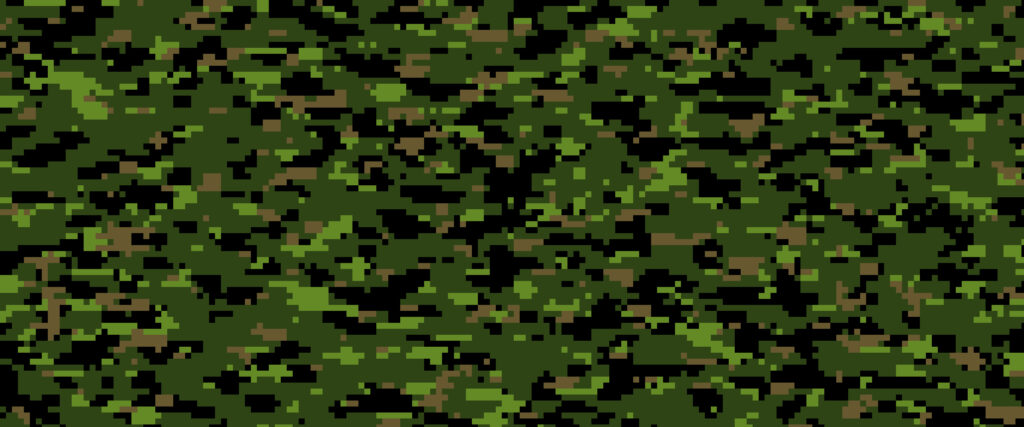
Canada’s first digital camo, CADPAT uses pixelated micropatterns in green, brown, and black to confuse the eye’s pattern‑recognition. Created for Canada’s armed forces in 1996, CADPAT was one of the world’s first “digital” designs and inspired many successors which involve various forms of pixelated camouflage.
MARPAT (Marine Pattern)

The U.S. Marine Corps’ digital pattern comes in woodland and desert variants, utilising tiny pixels that transition the U.S. Woodland camo colours smoothly. This micro‑pattern design enhances concealment at multiple distances and was introduced in 2001, influenced by the CADPAT design.
Universal Camouflage Pattern (UCP)
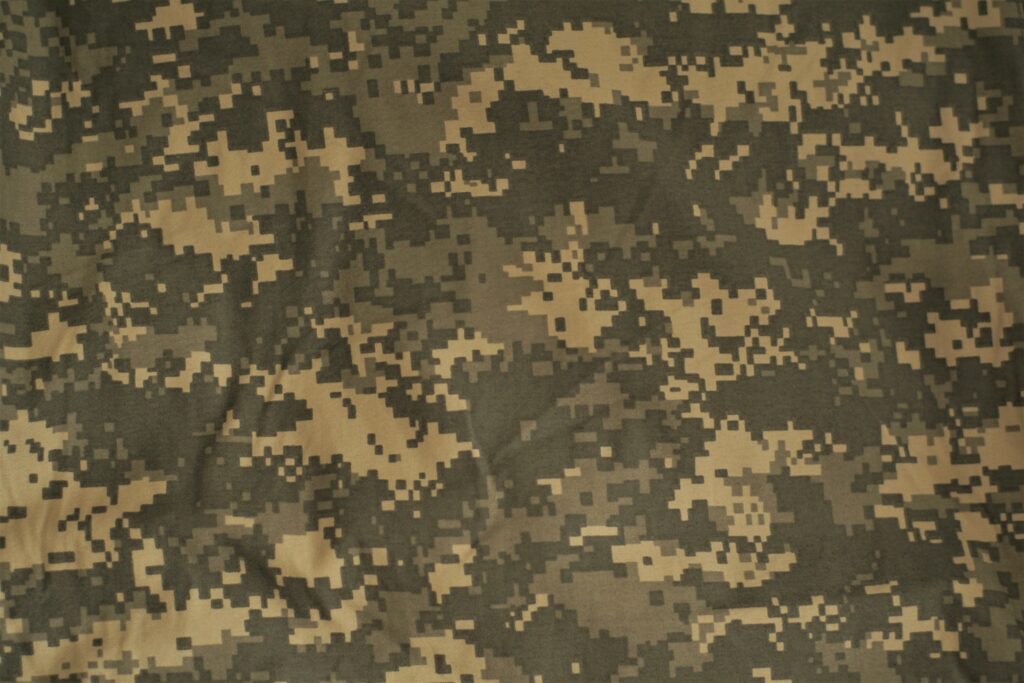
Introduced in 2005 and retired by 2019, UCP was the U.S. Army’s first “one‑pattern‑fits‑all” solution. Inspired by the CADPAT and MARPAT designs, its pixelated grey, tan, and sage green palette proved less effective in many environments, teaching a pivotal lesson about the limits of a single universal print.
Operational Camouflage Pattern (OCP)
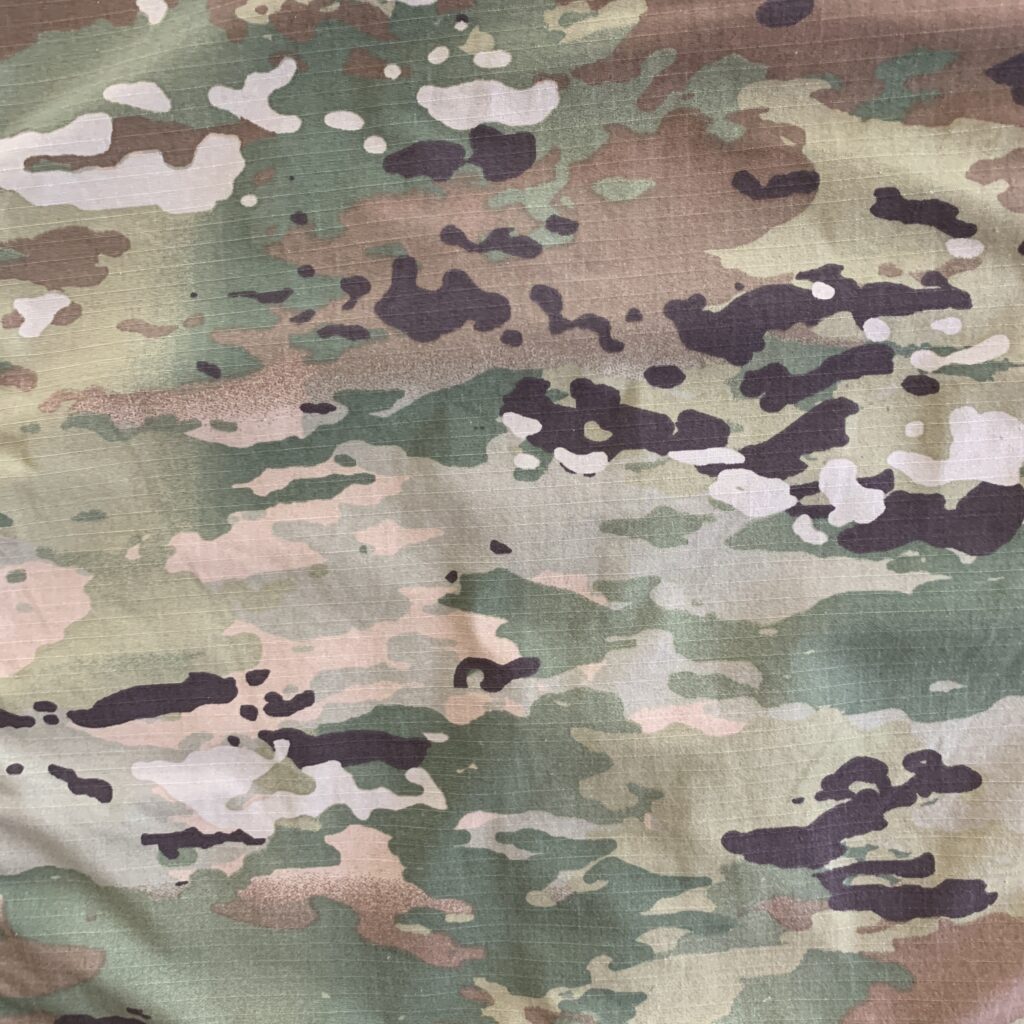
Officially replacing UCP back in 2019 (although first issued in 2015), OCP is nearly identical to MultiCam but with slight colour tweaks to better suit Afghanistan‑style terrain. Originally codenamed Scorpion W2, this design retains the gradient transition between colours and multi‑scale shapes for broader utility use.
Flecktarn
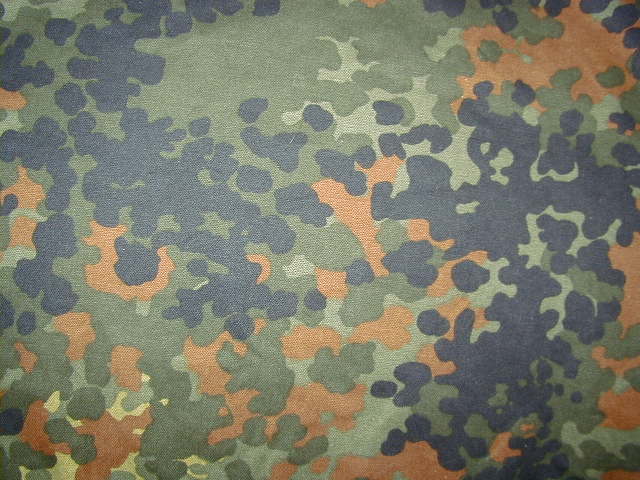
Adopted by Germany’s army (the Bundeswehr) in the 1990s, Flecktarn uses a mottled mix of five spots (green, brown, black, and two tans). Its stippled arrangement is particularly efficient in dense forests, scattering light and shadows to break up outlines. The Flecktarn pattern had a similar influence on the European military as that of the U.S. Woodland design, proving to be immensely popular.
Splinter (Splittermuster)
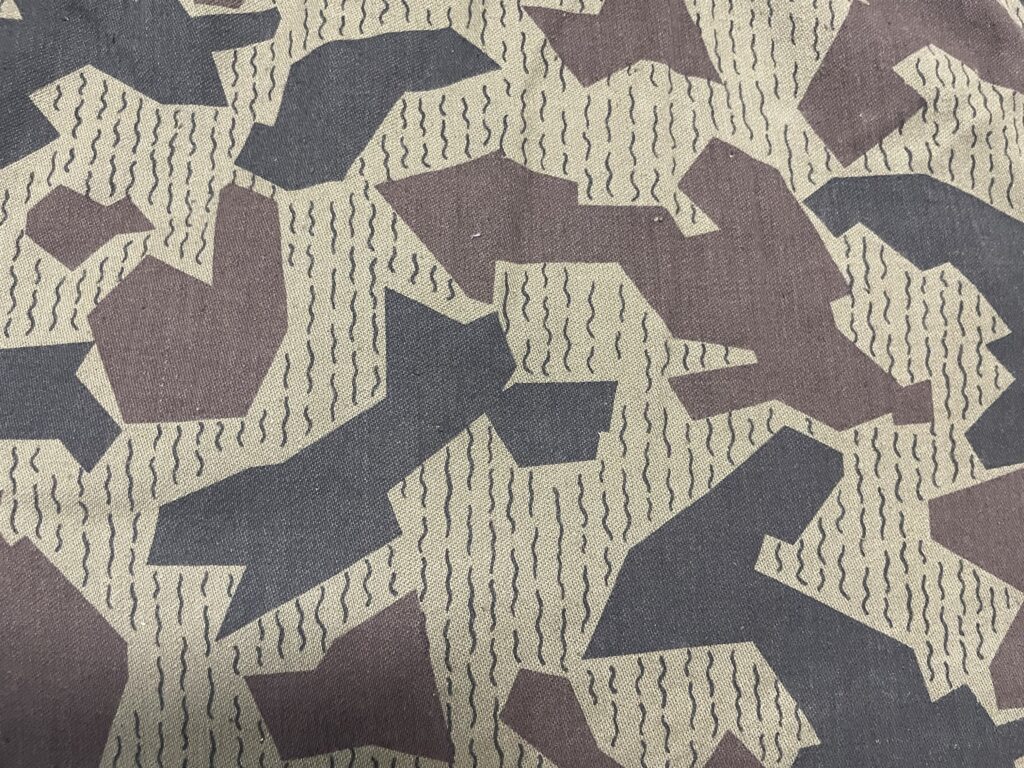
The Splinter pattern (Splittermuster) was developed by the German military in the late 1920s and was used by Nazi Germany’s Wehrmacht units. The design features jagged, polygonal shapes with crisp, sharp edges between colour fields, applied with a random scattering of dashes to improve its concealment. In the 1990s, the Swedish military adopted the M90 Splinter pattern, proving effective in Scandinavian forests.
Tiger stripe
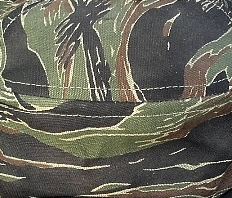
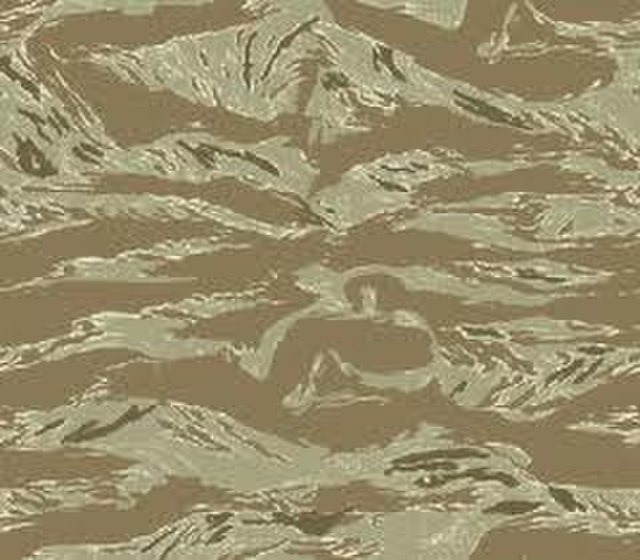
Tiger stripe camo originates from the French occupation of Vietnam and is most popular for its use by U.S. troops in the Vietnam War. The design mimics a tiger’s stripes with alternating curved bands of green and black over a brown background. Favoured largely by special forces for jungle operations, it excels at breaking up the human outline in dense undergrowth.
A desert variant was also developed and used by the U.S. Special Forces units in Afghanistan.
Duck Hunter (Frog Skin)
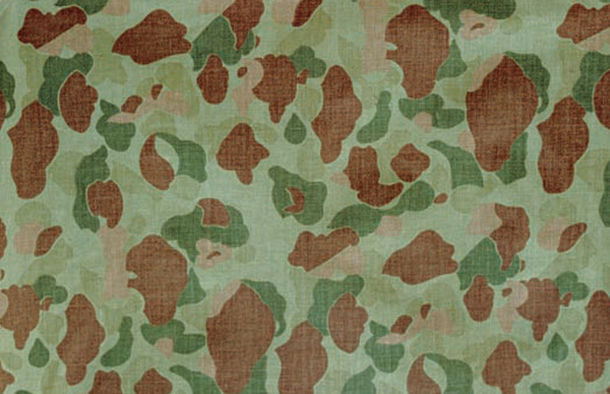
Originally known as US M1942, the Frog Skin camo was widely used by the U.S. military in the Pacific Theatre during WWII. Production of this type of camo was stopped in 1944 and sold as surplus, mainly to duck hunters, hence the alternative name “Duck Hunter camo”. Though short‑lived in service (1940s to the 1960s), it set the stage for future disruptive patterns.
Chocolate Chip (Desert BDU)
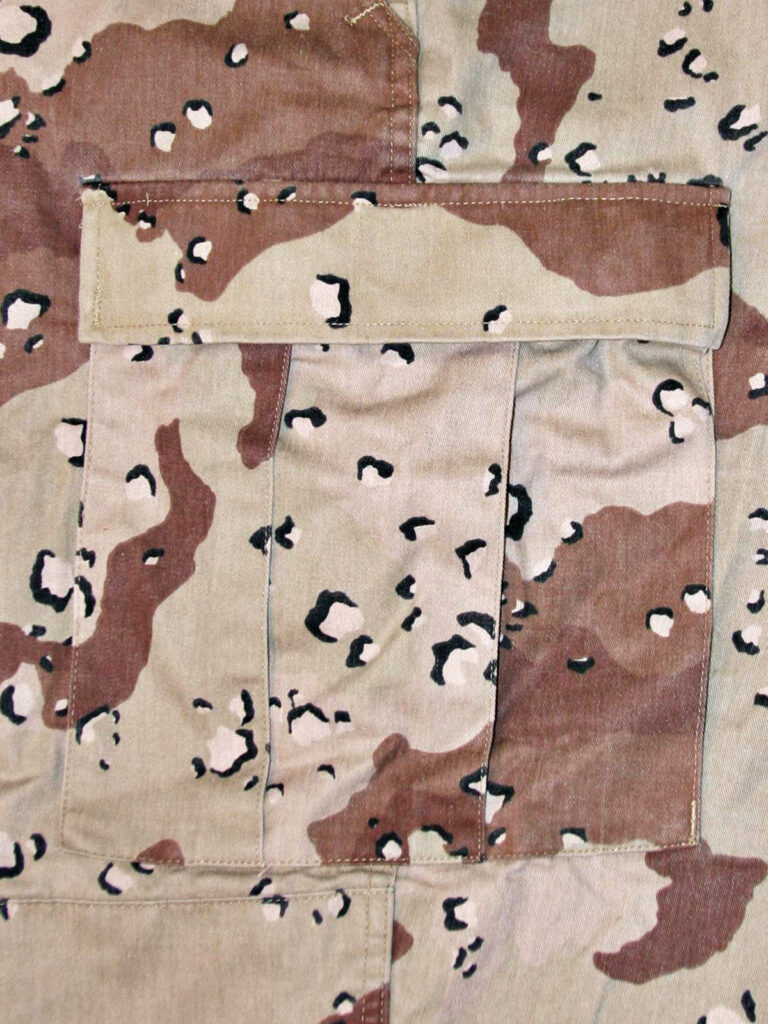
Officially known as “Desert Battle Dress Uniform (BDU), this six‑colour U.S. desert pattern was primarily used in the Gulf War. Nicknamed “Chocolate Chip” for its small black and brown spots over tan and beige, the high-contrast spots aimed to mimic rocky, barren terrains. However, they proved to be less effective at long range.
Raindrop (Strichtarn)
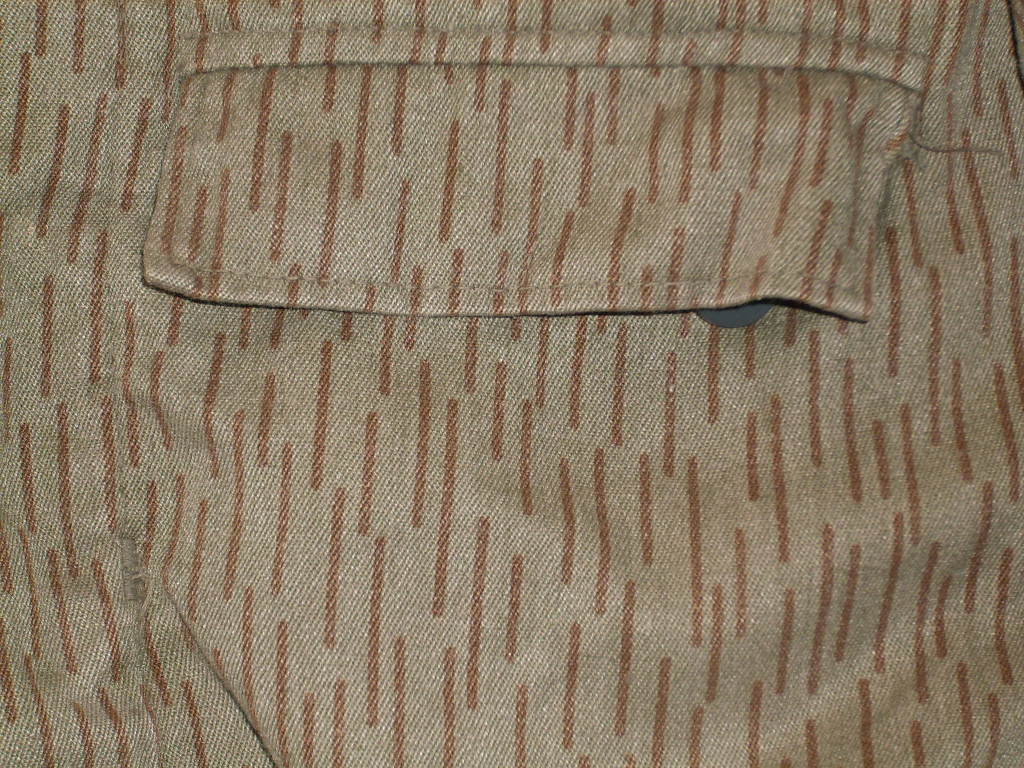
First trialled by the German Air Force in World War II, “Strichtarn” (“line camo”) features vertical streaks of green or brown over a grey‑green base. The fine “rain” lines create a soft blur of motion, useful in mixed woodlands and urban environments. Its most well-known use came during the Cold War, where it was widely adopted by the majority of the Warsaw Pact nations in Central Europe.
Brushstroke
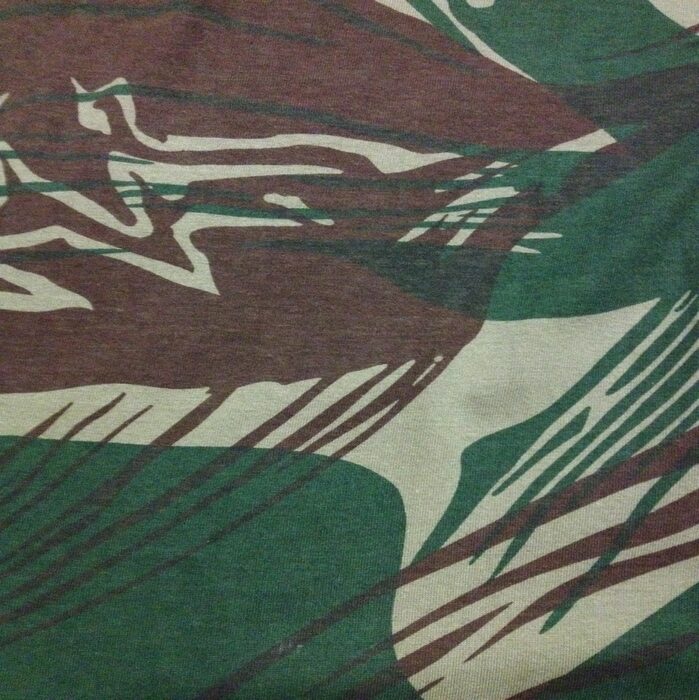
Brushstroke uses broad, overlapping strokes of green and brown, edged in black. Initially formulated by the British Ministry of Defence for issue to British Army paratroopers, Brushstroke proved an important transitional pattern for temperate environments, eventually leading to DPM. The camo was often hand-painted onto Denison smocks using non-colourfast dyes, although this quickly changed to a more sophisticated process.
Dazzle
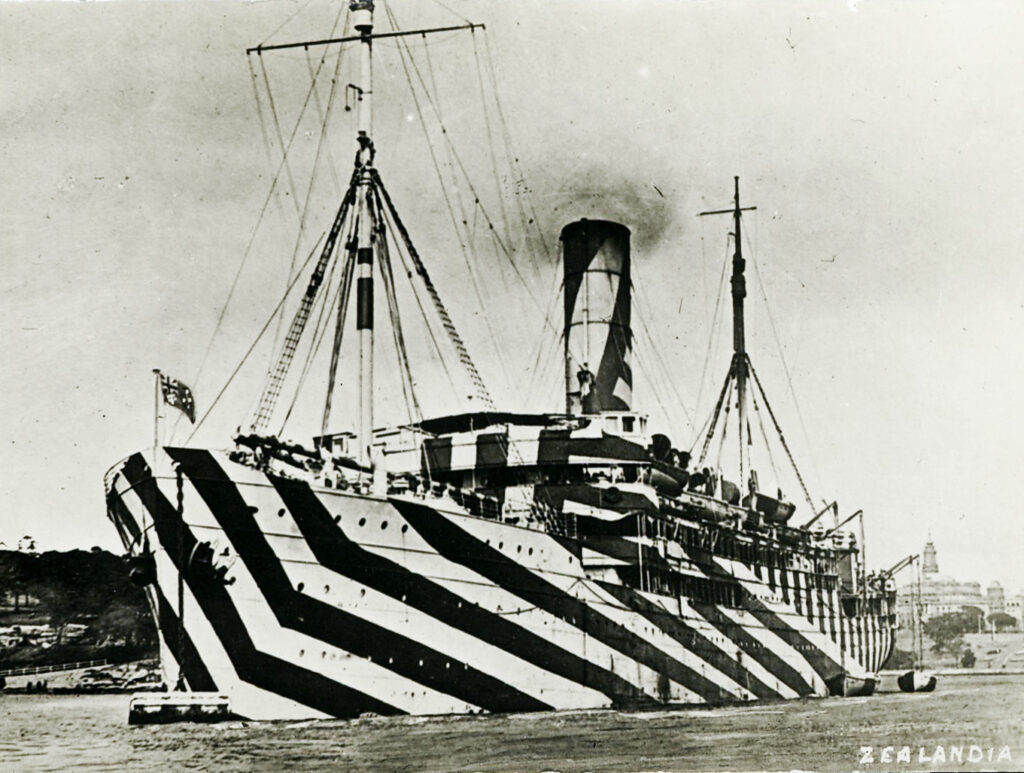
Unlike concealment patterns, Dazzle was painted on WWI ships and vehicles in bold geometric shapes of contrasting colours. Rather than hiding vessels, it aimed to confuse enemy rangefinders about a ship’s speed and movement. Although 2,000 ships involved Dazzle in WWII, the design was phased out when SONAR became widely used (a technique that uses sound waves to detect and locate objects underwater).
How to Choose the Right Camo Pattern
With so many design variations, it’s important to know which type of camouflage is best for your needs. To help you decide, we’ve broken down the main considerations:
Match the Environment
Perhaps the most important consideration, you should choose a pattern that mirrors the dominant colours and textures of your surroundings. For example:
- Sandy tans, beiges, or light browns are preferred for desert or barren areas
- Deep greens and browns are best suited for woodland environments
- Greys or neutral textures and tones are often used for urban & suburban landscapes
- Whites and light greys are particularly effective for snowy terrains
Consider Seasonality
Vegetation and ground cover change with the seasons. A woodland pattern that works in summer’s greener foliage might stand out in autumn’s redder leaves or winter’s bare branches. Therefore, you should look for reversible designs or seasonal variants if you move across different times of year.
Assess Your Activity
Tailor your choice to what you’re doing:
- Hunters often favour high‑contrast patterns that mimic foliage shapes, like the U.S. Woodland camouflage.
- Airsoft and paintball players may prioritise bold, disruptive prints for fast‑paced games, such as the British MTP.
- Tactical operators need more subtle, distance‑friendly designs, like the MultiCam or OCP camo.
Opt for Multi-Terrain Patterns if Unsure
If you operate or recreate in a variety of landscapes, we recommend that you opt for versatile patterns like MultiCam or Multi‑Terrain Pattern (MTP). Clothing that contains these designs can blend elements from multiple environments and perform reasonably well across a broad spectrum of settings.
Explore Drop Zone Supplies for Camouflaged Clothing & Accessories!
If you’re looking for military clothing and accessories containing some of the most popular camouflage designs, Drop Zone Supplies has got you covered. From backpacks to MOLLE-compatible ammo pouches, we stock a huge range of camo-designed gear from the world’s leading brands.
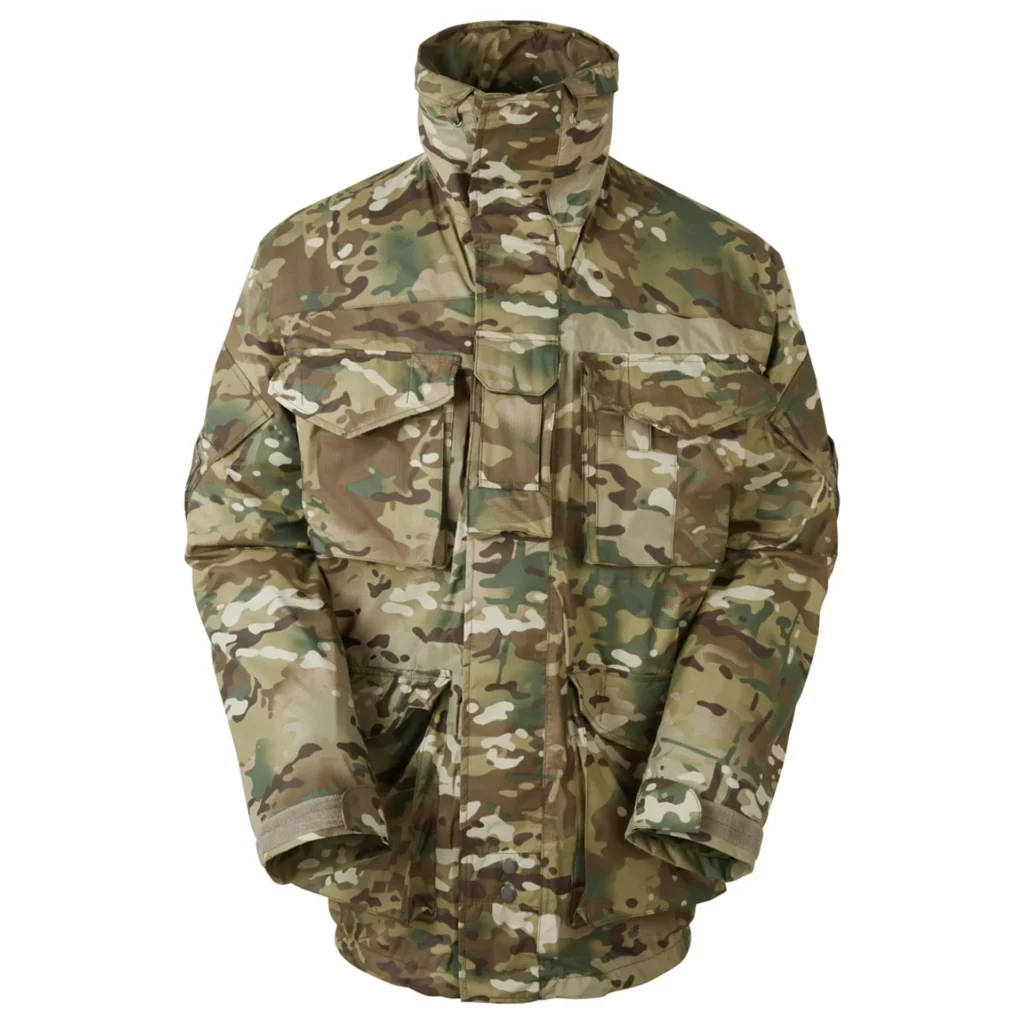
Keela Outdoors Multicam Jacket
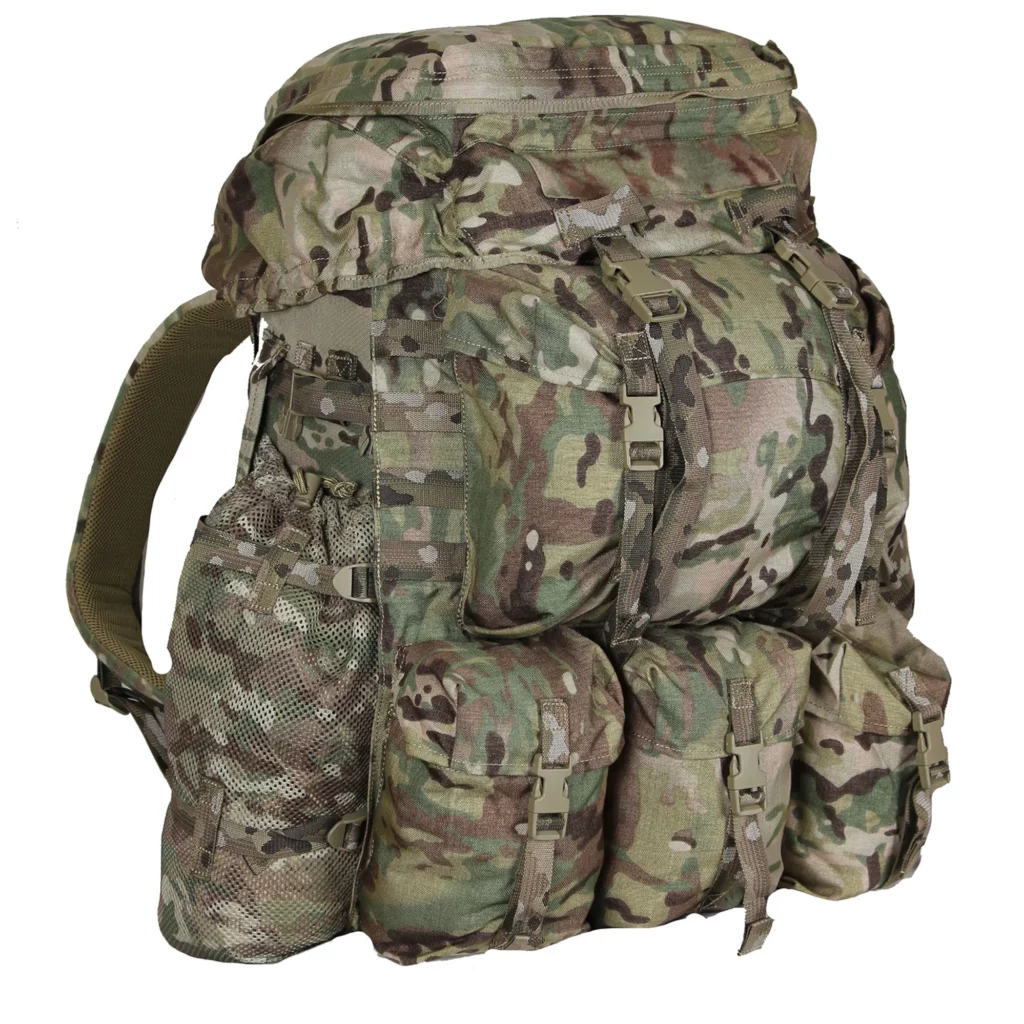
DropZone Multicam Bergen
Helikon Multicam UTP Tactical Pants



.JPG&sa=D&source=docs&ust=1753271308515459&usg=AOvVaw0ENRReL7nvjETypZkdNkPW)


_-_edited.jpg&sa=D&source=docs&ust=1753271308521747&usg=AOvVaw3X5rHZOclzmuTrwCMLPuAq)